


Table of Contents
- Why Apparel Hardware Decides Garment Lifespan
- Hardware Material and Finish Comparison
- Component-Specific Selection Criteria
- Swimwear Hardware Corrosion Resistance: Salt, Chlorine, and UV
- Lingerie Hardware Skin Safe: Nickel, Lead, and REACH Compliance
- Apparel Component Quality Testing You Can Specify
- Garment Hardware Sourcing Checklist
- Frequently Asked Questions
Last Updated: October 19, 2026
Why Apparel Hardware Decides Garment Lifespan
Durability in apparel hardware is the ability of a component to keep functioning through repeated use, laundering, and environmental exposure without breakage, jamming, or corrosion.
Fabric quality gets the attention. Hardware gets the warranty claims.
Below, we break down material selection, component-specific criteria, and the testing you can write into a purchase order, so you can specify hardware that survives the life of the garment rather than the first season.
Hardware Material and Finish Comparison
Start with the substrate, not the finish. Solid brass, copper-zinc alloy, nylon-coated steel, and molded plastic behave very differently under stress, and the finish on top only buys time.

Solid brass offers excellent corrosion resistance and a premium feel, which suits lingerie and bridge-price swimwear.
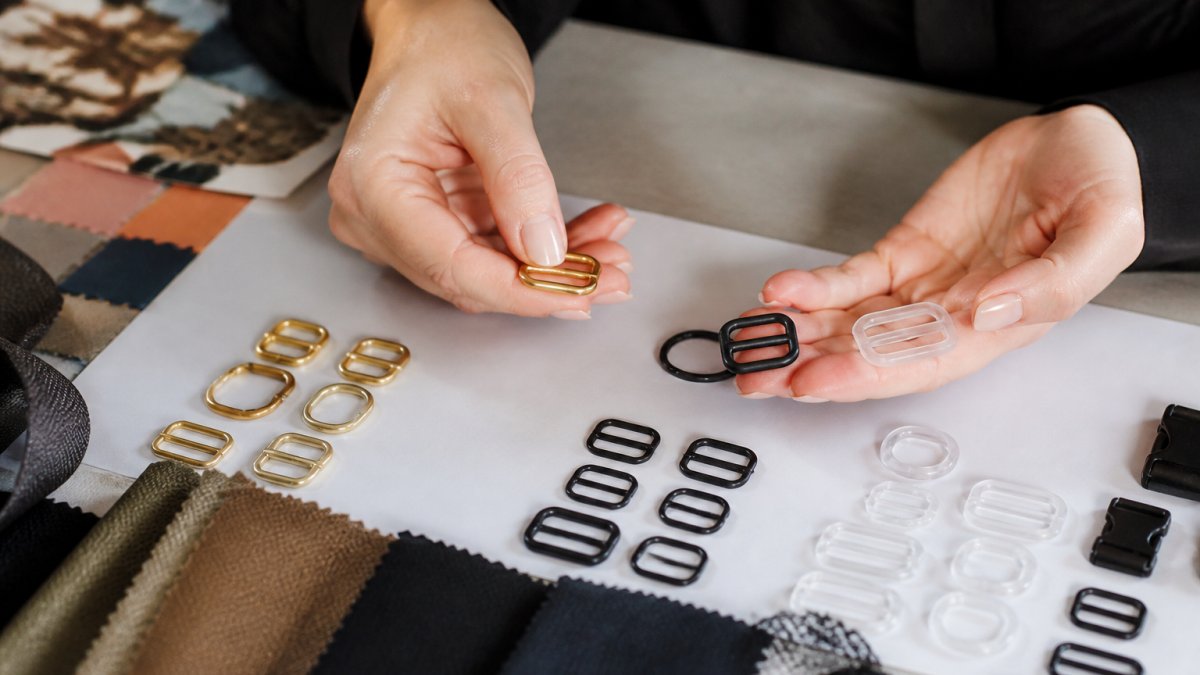
Finish choice is a durability decision too. Powder-coated and nylon-coated surfaces resist abrasion and reduce dye transfer onto light fabrics.
For metal hardware in intimate apparel, we recommend nylon-coated steel over bright plating. It is gentler on fine fabrics and holds its appearance through repeated washing.
Component-Specific Selection Criteria
Generic "high quality" language in a spec sheet tells a supplier nothing. Each component has its own failure mode, and your selection criteria should name it.
Zippers: Coil, Metal, and Molded Plastic
Coil zippers flex with the garment and resist jamming on curves, which makes them the practical choice for performance wear and knits. Metal zippers bring a premium look and high abrasion resistance but demand precise alignment; misalignment causes jamming and tooth damage.
Test the slider, not just the tape. A zipper fails at the pull far more often than at the teeth.
Snaps, Buttons, Buckles, Rings, and Sliders
Snaps fail through pull-off force and plating wear; specify holding force, not just diameter. Buttons should be tested for shank strength and wash durability. Buckles and sliders carry strap tension, so stress distribution at the bar matters more than finish. Rings take the load of adjustable straps and should be specified by wire thickness and coating.
For adjustable closures, our white dyeable nylon-coated steel hooks and black nylon-coated steel hooks are built for bras, swimwear, and dresses, available in ten sizes from 8mm to 25mm and made in France. Pair them with nylon-coated steel rings and sliders, both 100% lead-free and nickel-free and Oeko-Tex 100 certified.


| Component | Primary Failure Mode | What to Specify |
|---|---|---|
| Zipper | Slider jamming, tooth wear | Slider type, cycle test |
| Snap | Pull-off, plating wear | Holding force, coating |
| Button | Shank breakage | Shank strength, wash test |
| Buckle/Slider | Bar distortion | Load rating, wire thickness |
| Hook/Ring | Coating wear, corrosion | Base metal, coating, compliance |
Swimwear Hardware Corrosion Resistance: Salt, Chlorine, and UV
Swimwear is the harshest environment most apparel hardware will ever face.
The mechanisms are distinct and worth naming, because each one points to a different specification:
- Chlorine is an oxidizing agent. It attacks plating at edges and pinholes, then attacks the base metal underneath. Plated zinc alloy is the most vulnerable common substrate; solid brass and coated steel hold up far better.
- Salt accelerates galvanic corrosion wherever two dissimilar metals meet or wherever a coating is scratched. A scratch that exposes base metal becomes a corrosion cell, and the corrosion products bleed onto fabric.
- UV embrittles molded plastic and fades or chalks coatings. A plastic slider that felt fine in the sample room can crack after a season of poolside exposure.
- Sunscreen and sweat add oils and salts that can stain plating and degrade some coatings, which is why colorfastness testing belongs alongside corrosion testing.
Material choice drives the outcome more than any finish label. Solid brass offers excellent corrosion resistance and a premium feel, which suits bridge-price swimwear. Nylon-coated steel gives high tensile strength with a smooth, fabric-gentle surface and shields the base metal from direct electrolyte contact, which is why we favor it for adjustable closures on swimwear.
Finish choice is a durability decision too. Powder-coated and nylon-coated surfaces resist abrasion and reduce dye transfer onto light fabrics. Plated finishes look sharper but chip at contact points, and once the plating wears through, the base metal starts to corrode.
What to write into the specification:
- Base metal and coating thickness, not just the finish name. Two "gold" hooks can behave completely differently in a chlorinated pool depending on what sits under the plating.
- Salt-spray exposure to a stated duration, with the acceptance criterion being no red rust and no functional failure.
- Repeated chlorine immersion cycles, checking for coating blistering, color change, and stiffness.
- Colorfastness so hardware does not bleed onto fabric after wet exposure.
- UV exposure for any plastic component, checking for cracking or chalkiness.
For metal hardware in swimwear and intimate apparel, we recommend nylon-coated steel over bright plating. It is gentler on fine fabrics and holds its appearance through repeated washing and chlorinated exposure.
Hook - White Nylon Coated Steel - Dyeable (8 - 25mm) Made in France →
Lingerie Hardware Skin Safe: Nickel, Lead, and REACH Compliance
Lingerie hardware skin safe means the component will not release allergens or restricted substances onto skin during wear and washing.
Nickel is the most common contact allergen in metal hardware. Under REACH restrictions on nickel and lead in clothing, metal components in prolonged skin contact must meet nickel release limits, and lead content is capped in both adult and children's clothing.
That is why compliance is a documentation exercise, not a marketing claim. The practical checks are:
- Release versus content. Nickel is regulated by release rate for skin-contact items; lead is regulated by content. Ask for the test that matches the regulation, not a generic heavy-metals screen.
- Who issued the certificate. Independent lab testing, not supplier self-declaration, is what protects you. Verify the lab and the report number directly rather than accepting a PDF forwarded by a trading company.
- Report age and scope. A report dated within the last 12 months that names the exact component, base metal, and coating is worth more than an older report covering a similar but different item.
- Coating integrity. A compliant coating that chips in wear exposes base metal, so corrosion and abrasion testing belong alongside chemical compliance.
Our rings and sliders carry Oeko-Tex 100 certification and are 100% lead-free and nickel-free, which is the standard we would ask any supplier to evidence. For brands selling into the EU, that documentation trail should be ready before a compliance team or a retailer asks for it.
Apparel Component Quality Testing You Can Specify
Apparel component quality testing is the set of mechanical and chemical checks that predict whether hardware survives real wear. Write the test and the acceptance criterion into your purchase order, and durability stops being a hope.
Specify these:
- Cycle testing for zippers and closures: open and close to a set number, then check function.
- Pull-off force for snaps and buttons, measured to a minimum value.
- Salt-spray and chlorine immersion for swimwear components.
- Wash durability cycles, checking coating integrity and colorfastness.
- Nickel release and lead content testing to the applicable standard.
- Abrasion testing at contact points where hardware meets fabric.
Garment Hardware Sourcing Checklist
A garment hardware sourcing checklist turns intent into a repeatable process. Use it per component, per order.
- Base metal and coating named, with coating thickness stated
- Compliance certificates verified directly with the issuing lab
- Independent test reports dated within the last 12 months
- Cycle, pull-off, and corrosion test criteria written into the PO
- Hardware compatibility checked against fabric weight and seam construction
That last point matters more than it looks. Care, repair, and end-of-life planning extends garment life and supports sustainable fashion claims.
Allied Trimmings works with brands of every size, from start-ups placing modest monthly volumes to high-volume contract manufacturers, and we deal directly with factories as well as brands.
Hardware failures rarely announce themselves in the design room; they surface in returns, recalls, and reviews. Allied Trimmings supplies REACH and GPSR-ready, skin-safe European hardware, from nylon-coated steel hooks and rings to Oeko-Tex certified sliders, backed by independent testing and direct support for brands and factories alike.
Frequently Asked Questions
What makes apparel hardware durable?
Durability comes from four factors: base material, coating or finish, component geometry, and how the hardware attaches to the fabric. Solid brass and nylon-coated steel resist repeated stress better than thin plated zinc or molded plastic. A finish that survives wash cycles without flaking protects the base metal from corrosion. Correct sizing and compatible attachment methods spread load across the fabric instead of concentrating it at one point, which is where most breakage and tear-out starts.
How do you choose hardware for swimwear?
Prioritize corrosion resistance first. Salt water, chlorine, and UV exposure attack plated metals quickly, so specify solid brass or nylon-coated steel and ask for salt-spray test data. Check that the finish is colorfast and does not transfer dye onto light fabrics. For skin contact, confirm the hardware is nickel-free and REACH-compliant. Nylon-coated steel rings and sliders, such as those made in France and certified Oeko-Tex 100, are a practical starting point for straps and adjustable closures.
What hardware materials resist corrosion and tarnishing?
Solid brass, copper-zinc alloy, stainless steel, and nylon-coated steel hold up best. Solid brass and copper-zinc alloy resist tarnishing well when finished properly. Nylon-coated steel adds a barrier layer that protects the metal from moisture and friction. Plated zinc and thin decorative coatings tend to flake or pit after repeated washing and salt exposure. Always ask suppliers for corrosion test results rather than relying on the material name alone, because finish quality varies widely within the same metal category.
How can you test apparel hardware for strength and wear?
Specify measurable tests in your tech pack: pull-force testing for rings, sliders, and hooks; cycle testing for zippers and snaps; salt-spray testing for corrosion; and wash testing for finish durability and colorfastness. Ask for reports from an independent lab, not just an in-house certificate. For skin-contact items, request REACH and Oeko-Tex 100 documentation. Review wearer feedback from field trials as a final check, since lab tests do not capture every real-world stress pattern.
What makes hardware safe for direct skin contact?
Skin safety depends on what the hardware releases, not just what it contains. Nickel release is the main concern for lingerie and swimwear, so specify nickel-free or low-nickel-release components. Lead and cadmium restrictions also apply under REACH. Independent testing and Oeko-Tex 100 certification give you documented evidence. Nylon-coated steel rings and sliders that are 100% lead-free and nickel-free, with Oeko-Tex 100 certification, meet EU standards for both children's and adult clothing.
How do you choose the right hardware size and finish for a garment?
Match hardware size to strap width and fabric weight. A ring or slider that is too small concentrates stress and tears the strap; too large and it looks out of proportion and slides loose. For finish, match the garment's care routine: swimwear and outdoor gear need corrosion-resistant coatings, while lingerie needs smooth, skin-safe surfaces. Order samples in two or three sizes and run them through your actual wash and wear cycle before committing to a production order.
What should manufacturers check when sourcing apparel components?
Build a sourcing checklist: independent test reports for strength, corrosion, and skin safety; REACH and GPSR compliance documentation; consistent sizing across batches; available stock and lead times; and a clear plan for rush orders. Confirm whether the supplier works directly with your contract manufacturer or only with you. Ask how long they have supplied brands your size. A supplier that has operated since 1981 and provides European-made, independently tested components gives you a documented quality trail rather than verbal assurances.


