


Table of Contents
- Understanding Garment Trims and Supplier Categories
- Building Your Garment Trim Supplier Checklist
- Key Questions to Ask Trim Suppliers
- Evaluating Garment Trim Quality Testing Standards
- Comparing Pricing, MOQs, and Garment Trim Supplier Lead Times
- Assessing Supplier Reliability and Risk Management
- How to Find Reliable Garment Trim Suppliers: A Sourcing Strategy
- Frequently Asked Questions
Last Updated: October 21, 2026
Understanding Garment Trims and Supplier Categories
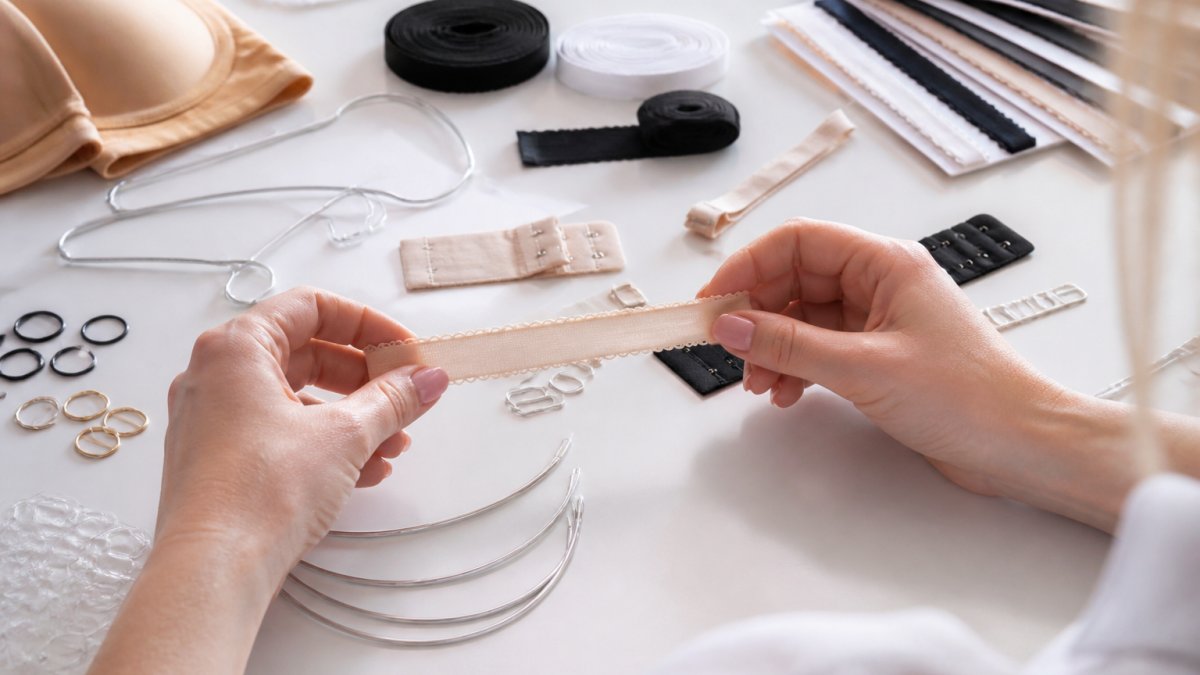
Garment trims are the functional and decorative components that define quality in apparel manufacturing. They include elastics, underwires, hooks, rings, casings, and specialty hardware that hold garments together and shape them to the body.
The trim supplier landscape divides into distinct categories. Some specialize in textile-based trimmings like elastic and casing. Others focus on metal hardware, underwires, hooks, and rings, often with nylon coating for comfort and durability.
At Allied Trimmings, we've worked with hundreds of apparel designers and manufacturers since 1981, and we've seen firsthand how the wrong supplier choice compounds over time.
Building Your Garment Trim Supplier Checklist
Finding reliable garment trim suppliers requires a structured evaluation process. Start by identifying what your brand actually needs: product categories, volume requirements, quality benchmarks, and compliance standards specific to your market.
Create a supplier shortlist by researching manufacturer directories, industry associations, and trade show contacts. Look for suppliers with documented experience in your specific segment, lingerie suppliers have different expertise than outdoor apparel manufacturers.
Next, conduct preliminary outreach. Ask for their product catalogs, certifications, and references from brands similar to yours. Pay attention to response time and professionalism. A supplier who takes three weeks to reply to a basic inquiry signals potential communication problems down the road.
Compliance and Certifications
Before anything else, verify that a trim supplier holds the certifications your market requires. For European and international markets, REACH compliance is non-negotiable. For apparel touching skin, OEKO-TEX certification demonstrates independent testing for harmful substances. For children's clothing, GPSR (General Product Safety Regulation) compliance is mandatory.
Request documentation of these certifications directly from the supplier. Legitimate certifications come with test reports and batch traceability. If a supplier claims compliance but cannot provide supporting documentation, move on.
Ask specifically about their testing protocols. Do they test raw materials before production? Do they conduct batch testing on finished components? Are tests conducted by independent third-party labs or in-house? Independent testing carries far more weight in regulatory disputes.
Production Capacity and Lead Times
Understand the supplier's production capacity relative to your volume requirements. A supplier comfortable with 500-unit monthly orders may struggle with 50,000-unit orders, or vice versa. Capacity mismatches create delays and quality degradation when suppliers rush production.
Discuss lead times transparently. Standard lead times for garment trims typically range from 4-8 weeks for stock items and 8-12 weeks for custom or specialty components. If a supplier promises unrealistic turnarounds, they're either overstating capacity or planning to cut corners on quality control.
Ask about their minimum order quantities (MOQs). Some suppliers maintain low MOQs to attract smaller brands; others require large orders to justify production runs. Understand the pricing structure at different volume levels and whether they offer flexibility for seasonal fluctuations.
Key Questions to Ask Trim Suppliers
Before committing to any supplier relationship, work through these questions systematically.
1. Can you provide references from brands in my segment? Suppliers who've worked with similar brands understand your specific challenges.
2. How do you handle quality control across production runs? Listen for specifics: testing frequency, documentation practices, and procedures for addressing defects.
**3.
4. How do you price custom or private-label components? Understand the cost structure for modifications, color matching, and specialized finishes.
**5.
6. Do you work directly with brands or only through intermediaries? Some suppliers sell exclusively through distributors or agents.
7. How long have you been supplying to apparel manufacturers? Industry experience matters.
Evaluating Garment Trim Quality Testing Standards
Quality testing separates suppliers who take compliance seriously from those who treat it as a checkbox. Understanding testing protocols helps you assess whether a supplier's quality claims are backed by evidence.
Request the supplier's testing documentation for relevant standards.
Ask whether they maintain batch records with test results. Traceability matters. If a quality issue emerges after delivery, you need to know exactly which production batch is affected and what testing was performed on that specific batch.
For skin-contact components like elastic and underwires, inquire about dermatological testing. Has the product been tested for skin irritation or allergic reactions? Independent testing from certified labs carries more weight than in-house claims.
Sample Evaluation and Production Verification
Request production samples before placing large orders. Evaluate them yourself using criteria relevant to your garments: flexibility, durability, colorfastness, and comfort against skin. Wear the samples in your own products if possible.
Ask the supplier about their sample process. Do they pull samples from actual production runs, or do they create special showcase samples? Real production samples reveal the actual quality your customers will receive.
When you receive production samples, test them rigorously. Wash them multiple times if they'll be laundered in finished garments. Expose them to sunlight if they'll face UV exposure.
Document your sample evaluation findings. If issues emerge, communicate them clearly and ask how the supplier will address them in full production.
Comparing Pricing, MOQs, and Garment Trim Supplier Lead Times
Price alone tells you almost nothing about value. A cheap trim supplier often delivers cheap results, missed deadlines, inconsistent quality, or compliance surprises that trigger recalls.
Strap Elastic - White Woven Polyamide Plush Elastic (20mm) - Made in France →
Compare pricing across suppliers, but normalize for other variables.
Lead times directly impact your production planning. A supplier offering 6-week lead times requires you to forecast demand further in advance than one offering 4-week turnarounds.
MOQs affect cash flow and inventory management. A supplier with 1,000-unit MOQs locks up capital differently than one accepting 250-unit orders.
Create a comparison table for your top supplier candidates:
| Supplier Factor | Supplier A | Supplier B | Supplier C |
|---|---|---|---|
| Price per unit | $2.50 | $2.75 | $2.30 |
| Minimum order | 500 units | 1,000 units | 250 units |
| Lead time | 6 weeks | 4 weeks | 8 weeks |
| Certifications | REACH, OEKO-TEX | REACH only | REACH, OEKO-TEX, GPSR |
| Payment terms | Net 30 | Prepayment | Net 45 |
This visual comparison forces you to weigh trade-offs explicitly rather than choosing based on a single factor.
Assessing Supplier Reliability and Risk Management
Reliability isn't a single attribute, it's the result of systems, experience, and genuine commitment to partnership. Assess it across multiple dimensions.
Start by evaluating their supply chain resilience. Ask how they source raw materials.
Inquire about their inventory practices. Do they maintain safety stock of common items, or do they produce everything to order?
Assess their financial stability indirectly through their operational practices.
Request information about their business continuity planning. What happens if their primary production facility experiences downtime? Do they have backup capacity?
Check their communication infrastructure. How do they handle order tracking? Can you access real-time production status?
Ask about their experience handling quality issues. Every supplier encounters problems occasionally. What matters is how quickly and thoroughly they address them.
How to Find Reliable Garment Trim Suppliers: A Sourcing Strategy
The most effective sourcing strategy combines multiple discovery channels and validates findings through direct evaluation.
Start with industry directories and trade associations. Organizations serving the apparel industry maintain supplier databases.
Use your network. Ask other apparel brands, manufacturers, and industry contacts for supplier recommendations.
Research online presence and reputation. Review supplier websites for professionalism and detail.
Conduct reference calls. Contact the supplier's existing customers. Ask specific questions: Do they meet delivery commitments?
Evaluate samples rigorously. Request samples from your top 2-3 candidates. Test them against your actual use cases.
Negotiate terms explicitly. Don't assume standard terms.
Start with a small pilot order. Before committing to large volumes, place a modest initial order.
Finding reliable garment trim suppliers isn't about identifying the cheapest option, it's about building a partnership with a supplier whose capabilities, reliability, and values align with your brand. Whether you're sourcing European-made elastics like our Strap Elastic - White Woven Polyamide Plush Elastic (20mm), precision hardware like our Underwire - Classic Long - 24 Gauge Nylon Coated Steel, or specialized components like our Hook - White Nylon Coated Steel, the same evaluation principles apply: verify compliance, assess quality through samples, understand capacity and lead times, and build relationships with suppliers who prioritize partnership over transactions.


Frequently Asked Questions
How do I verify a reliable garment trim supplier's compliance and certifications?
Request documentation for REACH, GPSR, OEKO-TEX, or industry-specific certifications relevant to your market. Ask suppliers for independent test reports from accredited labs, not just self-certification. Verify the certification body itself is legitimate. For skin-contact trims in lingerie and swimwear, confirm nickel and lead-free status with third-party testing. Ask how often they re-test and whether they maintain compliance documentation for traceability. Legitimate suppliers maintain transparent records and can provide batch-specific certificates upon request.
What questions should I ask a garment trim supplier about their production capacity?
Ask about minimum order quantities (MOQs) for your required styles and volumes. Clarify standard lead times and rush-order capabilities with associated costs. Request their production schedule visibility and how they handle peak-demand periods. Ask whether they hold safety stock or work on made-to-order only. Inquire about their backup suppliers or redundancy for critical components. Confirm their maximum monthly output and whether they can scale with your growth. Understanding these details prevents supply chain disruptions and ensures they can reliably support your brand's needs.
How should I evaluate garment trim quality testing before committing to a supplier?
Request physical samples and run your own durability tests specific to your end-use: salt-water resistance for swimwear, UV stability for outdoor apparel, or elasticity retention for lingerie. Ask the supplier for their quality control process, including how frequently they test batches and what parameters they measure. Review their test data for tensile strength, color fastness, shrinkage, and any skin-contact safety metrics. Request a small pilot order to evaluate production quality before placing larger commitments. Verify that samples match the specifications of full production runs, not just best-case batches.
What are typical garment trim supplier lead times and how do I negotiate them?
Standard lead times vary depending on customization and order complexity. Discuss lead times during initial supplier qualification and factor them into your production planning. Ask whether paying a premium reduces turnaround or if expedited shipping is available. Request a clear written commitment on lead times and penalties for delays. For critical components, negotiate split shipments to reduce inventory risk. Establish communication protocols for mid-production updates so you can anticipate delays early.
How do I compare quotes from multiple garment trim suppliers fairly?
Request quotes for identical specifications, quantities, and delivery terms from at least three suppliers. Calculate total landed cost, including shipping, duties, and handling. Compare not just unit price but also MOQ flexibility, payment terms, and sample costs. Evaluate whether pricing reflects quality standards and compliance certifications. Ask if volume discounts apply as you scale. Request a breakdown of costs to understand where premium pricing comes from. Avoid choosing solely on lowest price; factor in lead time reliability, communication quality, and technical support, which directly affect your production timeline and product quality.
What red flags should I watch for when evaluating a reliable garment trim supplier?
Be cautious of suppliers unable to provide independent test certificates or compliance documentation. Avoid those with unrealistically low prices, they may cut corners on materials or testing. Watch for vague responses about production capacity, lead times, or quality control processes. Red flags include no physical address, poor communication responsiveness, or reluctance to provide references. Be wary of suppliers who pressure you into large MOQs before proving quality or who cannot provide batch traceability. If a supplier cannot answer specific technical questions about their materials or processes, they may lack genuine expertise. Trust your instincts; reliable suppliers are transparent about capabilities and limitations.
Should I source garment trims domestically or internationally?
Domestic sourcing (Europe, North America) typically offers shorter lead times, easier communication, and simpler compliance verification, but may have higher unit costs and larger MOQs. International sourcing (Asia) can reduce per-unit costs and offer high volume capacity but involves longer lead times, higher shipping costs, and more complex quality control. Consider your production volume, timeline, and budget. For premium or specialized trims requiring close collaboration, European suppliers often provide better technical support and faster iteration. For high-volume, price-sensitive products, international sourcing may be justified. Many brands use a hybrid approach: core components from reliable domestic suppliers and commodity items from international sources.
How do I build a long-term relationship with a reliable garment trim supplier?
Start with small orders to test quality, communication, and reliability before committing to larger volumes. Provide clear, detailed specifications and realistic timelines. Pay invoices on time and communicate openly about any quality concerns. Share your growth plans so they can plan capacity accordingly. Schedule regular check-ins to discuss performance, upcoming needs, and potential improvements. Offer feedback on product quality and delivery performance. Consider negotiating volume discounts as your relationship strengthens and order sizes increase. Reliable suppliers value predictable, communicative partners; treating them as strategic partners rather than transactional vendors builds loyalty and often results in better service, priority handling during peak periods, and willingness to innovate with you.


